
In partnership with the Royal Institute of the Architects of Ireland (RIAI) and AccessibleEU, the Centre for Excellence in Universal Design (CEUD) at the National Disability Authority (NDA) is delighted to host a webinar series on Universal Design in the Built Environment. We are hosting four lunchtime webinars over four weeks with different speakers.
- Levelling Up - Steps to Safer Stairs
29 September 2026, 12:30-13:30 with Mike Roys, Rise and Going
- Boland’s Mills Case study, RIAI Universal Design Award joint winner
13 October 2026, 12:30-13:30 with Donncha O’Shea, Gustafson Porter + Bowman
- Universal Design in Building Components: Micro design decisions for safer, more usable buildings
20 October 2026, 12:30-13:30 with Kate O’Daly-Keane, Centre for Excellence in Universal Design
- New Special Educational Needs School, Letterkenny Case Study,
RIAI Universal Design Award joint winner 2026
27 October 2026, 12:30-13:30 with Ronan McCann, McGarry Ní Éanaigh Architects
Registration
Registration is free for all webinars. ISL Interpretation and Captions will be available at these events.
The webinars will be recorded. As an attendee you will not be visible to other attendees and will not be recorded.
Attendees can register to attend one or more of the webinars. CPD Certificates are available to those who attend on the day for each webinar.
If you have a query, please email info@ceud.ie.
Meet the Speakers
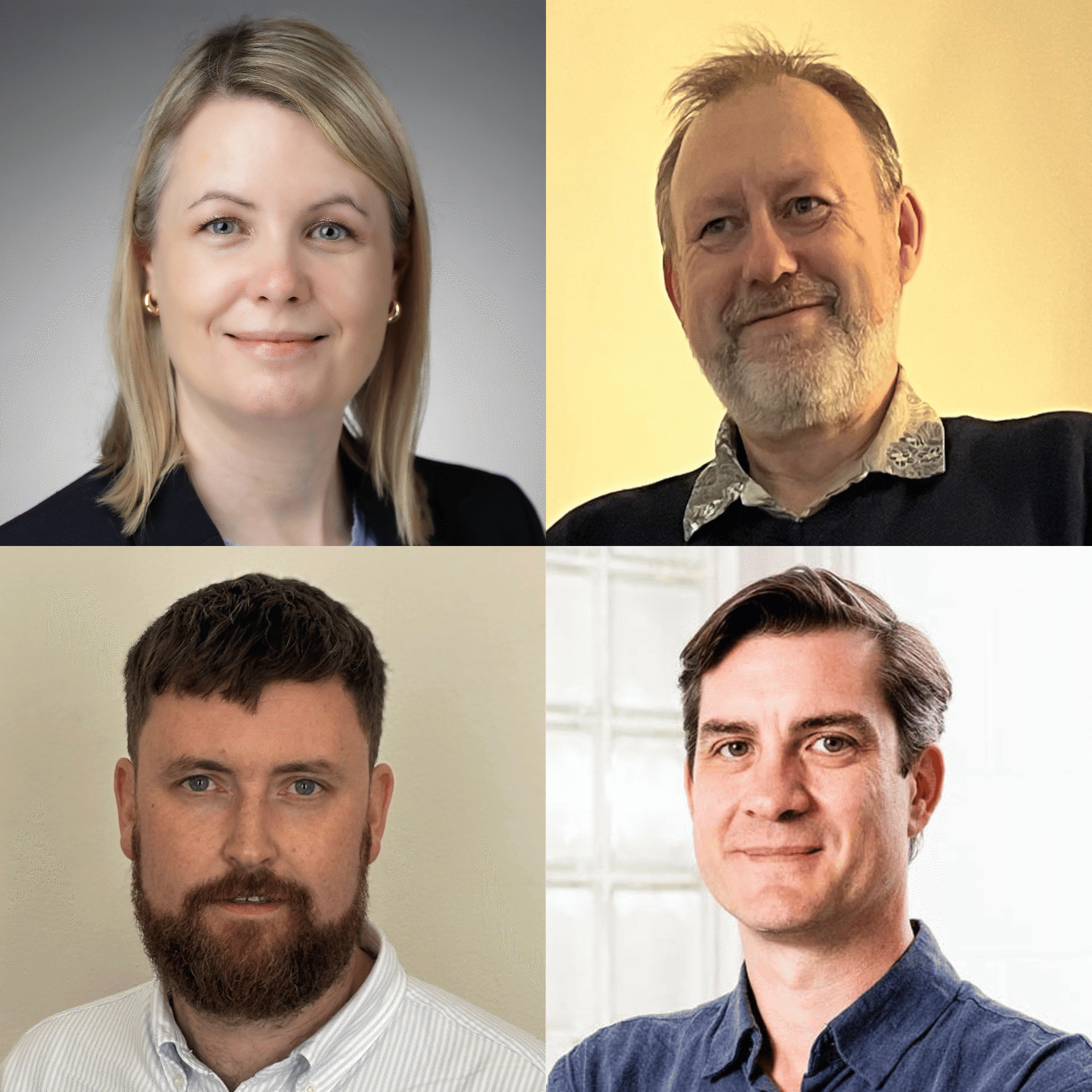
Mike Roys, Rise and Going
Mike’s interest in stairs, and stair safety began nearly 30 years ago. Having recently graduated from Surrey University he joined the Building Research Establishment (BRE) in 1990 working in the field of human factors and environmental psychology. While at BRE, he was able to study further and graduated with a Master’s degree in Environmental Design and Engineering in 1994, giving him a good foundation in understanding buildings and how people interact with them.
Health and Safety in buildings became an interest for Mike when BRE produced two sister reports comparing health and safety hazards in the home in 1995, a study which he went on to repeat in 2000 and in 2008. These reports formed the foundation of the Housing Health and Safety Rating Systems, currently used as part of the Decent Homes Assessment. BRE used this methodology to assess the costs relating to poor housing in England, which Mike was instrumental in developing. Falls on or from stairs remains the highest risk hazard in dwellings from the safety side of the reports. The latest estimates based on 2016 data suggest over 700 fatalities and 400,000 serious injuries in England and Wales per annum.
After publishing his first peer reviewed paper on stairs, Mike led ten years of government funded research on stair design and safety. During this time papers were published on limited access stairs, the ability of children to climb guarding, and the effects of variations in step dimensions. Further research considered the slip resistance of contaminated step surfaces and the effectiveness of proprietary nosings. This research was summarised in a single publication, Refurbishing stairs in dwellings to reduce the risk of falls and injuries.
Mike was appointed chair of the British Standards committee (B/208) looking into stair design, and remained in post for many years, and he is still a member of this committee. While he was chair, the committee was responsible for the publication of standards BS 5395-1:2010 and BS 5395-4:2011 on straight stair design and limited access stairs. The content of these standards is largely based on the findings from the government funded research mentioned earlier and highlights good practice for designing stairs for normal and private use. Also, during this time, his expertise was occasionally sort from government on appeals relating to Approved Document K.
Since 2017, Mike has had his own business, Rise and Going Consultancy, providing expertise on stair design and safety and advice on other building related hazards. He continues to have an active role within the UK Slip Resistance Group, and provide advice to RoSPA on stair related issues through the National Home Safety Committee. His work has influenced standards in America, Canada and Australia, and he remains in contact with colleagues working in a similar field in all these countries. He is also involved in stair research projects conducted in a number of English Universities. As well as providing support to builders and developers of buildings, Mike has provided expertise in legal cases looking at stair falls. He has also also produced Safer by Design guidance for RoSPA, and is currently working with building regulation in England and Wales to support the potential update of Approved Document K.
Donncha'OShea, Gustafson Porter + Bowman
Donncha O’Shea is a Partner at Gustafson Porter + Bowman, leading several project teams and championing sustainability and technology in the running of the London-based office. Donncha is particularly interested in creating universally designed landscapes that support positive sensory experiences for all users. This has informed his experience on complex projects involving challenging topography and sensitive heritage elements both in the UK and world-wide.
His completed projects with the practice include London’s recently opened Chelsea Barracks, Curzon Street, Rathbone Square and New Ludgate. He is currently leading teams on projects including the UK National Holocaust Memorial and Learning Centre, the iconic Space House and Edgware Town Centre in London as well as a number of projects in Ireland, including Google’s Boland’s Mills, as well as invited international competition entries.
Donncha regularly takes part in design juries and panels and has lectured at The Bartlett and at Greenwich University in London. He studied History of Art & Architecture at Trinity College Dublin, and Architecture at DIT Bolton Street, Dublin, before completing a MSc in Environmental Design at Cardiff University. Donncha joined Gustafson Porter + Bowman in 2008, becoming a Partner in 2016.
Kate O'Daly-Keane, Centre for Excellence in Universal Design
Kate O’Daly-Keane is an architect with more than 15 years of experience in the residential sector, having worked with award-winning architectural practices as well as in private practice. Alongside her architectural career, she founded and ran a successful jewellery business that specialised in customised, sustainable pieces fabricated using 3D-printing technology. She has also worked with the Housing Agency, where she contributed to advancing accessible design and improving access to information. Since joining the National Disability Authority (NDA) in 2025, she has continued to champion inclusive and people-centred approaches to design. Her commitment to sustainability and ensuring that people remain at the heart of the design process closely aligns with the principles of Universal Design.
Ronan McCann, McGarry Ní Éanaigh Architects
Ronan McCann is a Director at MGNÉ Architects, formerly McGarry Ní Éanaigh Architects. Throughout circa 20 years in practice he has worked on a wide variety of award-winning projects including housing, commercial, urban design, community, education and recreation, at a variety of stages and scales. His strengths lie in resolving complex brief and regulatory requirements through architectural design, the effective communication of solutions, and their successful realisation through the procurement, contract and construction processes. He has particular experience in the design of trauma-informed environments and for special educational needs. He also has particular expertise in Contract Administration, with a focus on the Public Works Contracts, and was awarded the 2021 Nael G. Bunni Medal by Trinity College for Construction Law and Contract Administration. He has previously served as President of the Architectural Association of Ireland (2015-17) and as Design Fellow in UCD School of Architecture among other engagements.
Learning Outcomes
Webinar One: Levelling Up: steps to safer stairs Tuesday 29 September 2026, 12:30-13:30
- Awareness of universal diversity of users impacted by stair design.
- Knowledge of stair design to improve the accessibility and reduce risk of falls on stairs.
- Awareness of further resources and information.
- Understanding of the spatial and detail design implications for taking a Universal Design approach to stairs.
Webinar Two: Boland’s Mills Public Realm Case study, RIAI Universal Design Award joint winner Tuesday 13 October 2026 , 12:30-13:30
- Knowledge of universal design principles and their application in the design of the external environment.
- Understanding of the benefits of universal design for building all users, demonstrated through the case study.
- Awareness of further resources and information.
Webinar Three: Universal Design in Building Components: Micro design decisions for safer, more usable buildings Tuesday 20 October 2026, 12:30-13:30
- Improved Awareness of the diversity of users impacted by the design of the built environment.
- Understanding of the benefits of taking a Universal Design approach, including designing for people with neurodiversity.
- Awareness of further resources and information.
Webinar Four: New Special School Letterkenny Case Study, RIAI Universal Design Award joint winner Tuesday 27 October 2026,12:30-13:30
- Awareness of universal design features and elements in school design.
- Knowledge of universal design principles and their application in the school design.
- Understanding of the benefits of universal design for building all users, demonstrated through the case study.
- Awareness of further resources and information.
This is an AccessibleEU event

AccessibleEU is one of the flagship initiatives proposed by the European Commission Strategy for the Rights of Persons with Disabilities 2021-2030. It is a resource Centre on accessibility working on areas such as built environment, transport, information and communication technologies to ensure the participation of persons with disabilities in all areas of life on equal basis with others. The Centre for Excellence in Universal Design is delighted to be a member of the AccesibileEU Community of Practice.