
This guidance currently aligns with the Web Content Accessibility Guidelines (WCAG) 2.1 and is being updated to reflect WCAG 2.2.
Organisations subject to the Web Accessibility Directive or the European Accessibility Act should refer to WCAG 2.2 (W3C.org)(w3.org) (w3.org)(w3.org) (w3.org), as compliance will be required when the revised EN 301 549 standard (PDF)(etsi.org) (etsi.org)(etsi.org) (etsi.org) is published in the Official Journal of the European Union in December 2026.
Techniques
Specifying languages in Word documents
- Select the text you want to specify a language for (select all of the content – “Edit”; “Select All” – if you want to set the language for an entire Word document);
- On the “Review” ribbon, the “Language” option will provide a list of languages from which you can choose the appropriate one.
An example of good practice
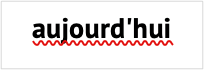
“Aujourd’hui”, the French word for “today”, with the correct language selected:

An example of bad practice
“Aujourd’hui”, the French word for “today”, with the language still set to English (UK):
References
WCAG 2.1
- 3.1.1 Language of Page (A)
- 3.1.2 Language of Parts (AA)
EN 301 549 v 2.1.2
- 9.3.1.1 Language of Page
- 9.3.1.2 Language of Parts